
Wood, Shell, Resin, Coconut or Metal? How to Choose Buttons for Clothing
Wood, shell, resin, coconut or metal? Compare clothing buttons by look, size range, best garments and custom options, plus how to read button sizes in ligne.
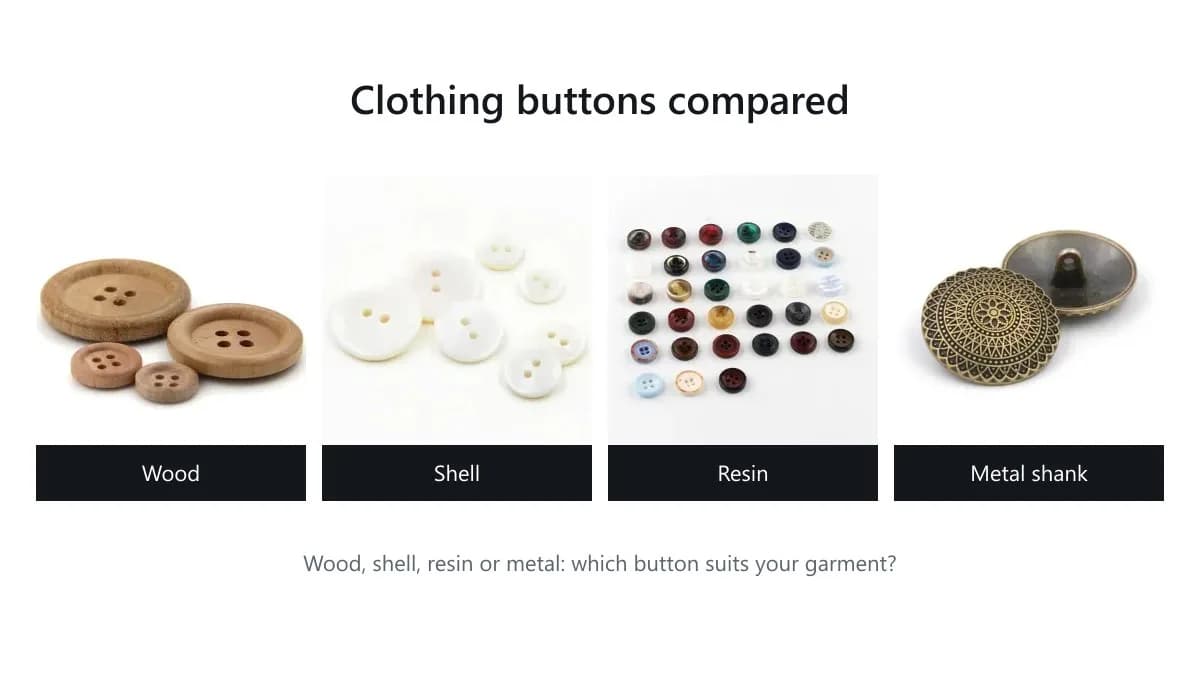
Short answer: choose resin for everyday shirts and uniforms because it can be dyed to match any fabric; mother-of-pearl shell for premium shirts and blouses; wood or coconut for knitwear, childrenswear and natural or casual styles; and metal shank buttons for coats, blazers and heritage looks. Jeans and workwear use metal tack buttons, which are pressed on instead of sewn.
Buttons are small, but they are one of the first details a customer notices and touches. This guide compares the button materials we make, with real size ranges from our catalogue, so you can pick the right one before sampling.
Quick picks
Shirts and uniforms: resin (colour-matched) or shell (premium).
Cardigans, knitwear and childrenswear: wood or coconut.
Coats, blazers and jackets: metal shank or large wood buttons.
Jeans and workwear: metal tack buttons and press studs.
What are the main types of clothing buttons?
- Resin: smooth, light and easy to dye; the standard shirt button.
- Mother-of-pearl shell: natural shell with a soft lustre; a premium shirt button.
- Wood: warm and natural, in plain, engraved or laser-cut designs.
- Coconut: cut from coconut shell, with a natural textured back.
- Metal shank: domed metal buttons with a loop on the back, sewn on.
- Metal tack and press studs: pressed through the fabric with a machine; no sewing.
Clothing buttons compared
Material | Look | Sizes in our range | Best for | Custom options |
|---|---|---|---|---|
Resin | Solid, pearl-effect or marbled | Shirt sizes; others on request | Shirts, blouses, uniforms | Dyed to match, laser logo |
Shell | Natural lustre, white, ivory, champagne or grey | 9–23mm (14L–36L) | Premium shirts, blouses, knitwear | Size, 2 or 4 holes |
Wood | Natural grain, warm tones | 11.2–35mm (4-hole), 13–38mm (laser-cut) | Knitwear, coats, childrenswear | Stain colour, engraved logo, cut pattern |
Coconut | Natural texture or glossy colour | About 11.5mm (18L) heart shape | Childrenswear, cardigans | Colour, size, logo |
Metal shank | Domed, embossed, antique finishes | 15–25mm | Coats, blazers, jackets | Logo or pattern (mould) |
Metal tack / press stud | Flat or domed metal cap | 17mm tack; 10–15mm press studs | Jeans, workwear, jackets | Logo on the cap (mould) |
Our MOQ is 100 pieces per design for every button type.
How are button sizes measured?
Button sizes are often given in ligne (L). One ligne is 0.635mm, so an 18L button is about 11.4mm across and a 24L button about 15.2mm. When you send an inquiry, either unit is fine; we confirm the size against your buttonhole on the sample.
- Shirts and blouses: roughly 10–15mm
- Cardigans and knitwear: roughly 15–25mm
- Coats and jackets: roughly 25–35mm
These are rough guides. Always check the buttonhole length on your sample garment.
When should you choose resin or shell buttons?
Resin: the colour-matched workhorse
Resin buttons can be dyed to match almost any fabric, which makes them the default for shirts and uniforms. Our four-hole shirt buttons have a raised rim and come in solid, pearl-effect and marbled colours.
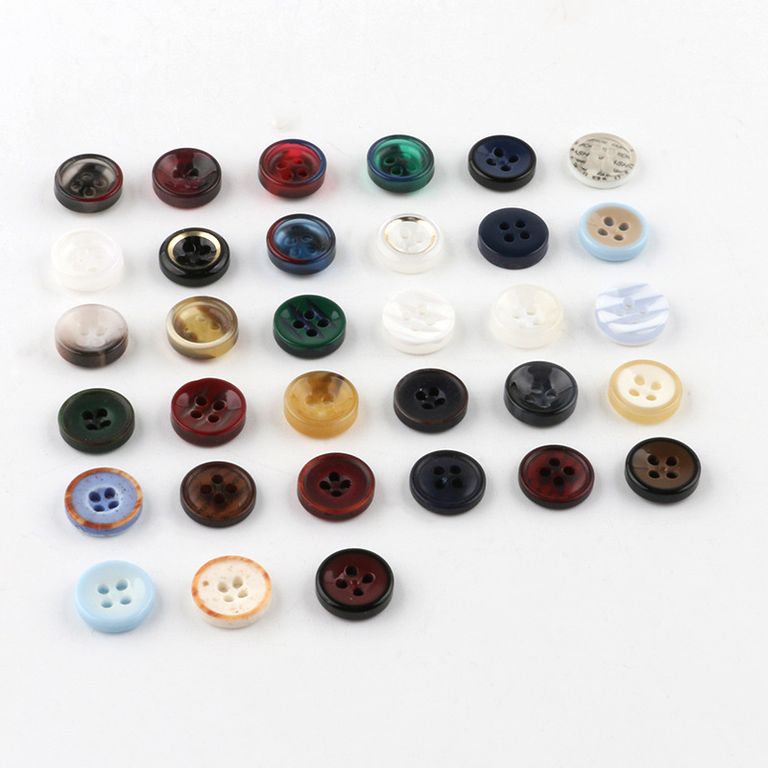
Four-hole resin shirt buttons. See the resin shirt buttons.
Shell: a natural premium finish
Mother-of-pearl shell buttons have a soft, natural lustre that resin can only imitate. Standard sizes are about 9–10mm for shirts, with custom sizes from 14L to 36L (about 9–23mm), in natural white or ivory, champagne or grey, with two or four holes.
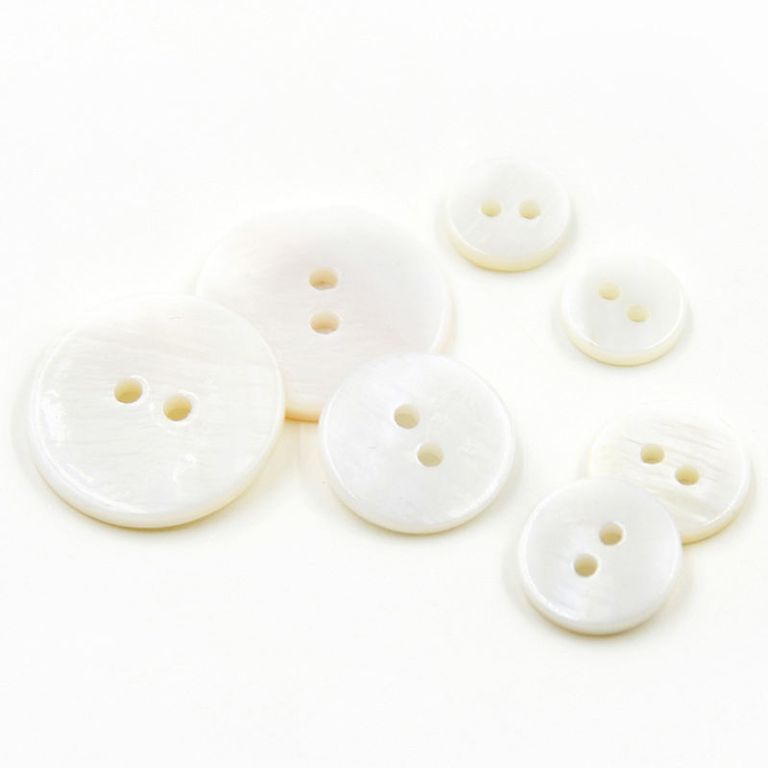
Mother-of-pearl shell buttons. See the shell buttons.
Good to know: shell is natural, so colour and lustre vary slightly from button to button.
When are wood or coconut buttons the better choice?
Wood and coconut give garments a natural, handmade character that suits knitwear, childrenswear and casual or eco-focused collections.
- Plain wood: four holes and a raised rim, in nine sizes from 11.2mm to 35mm.
- Laser-cut wood: openwork patterns in ten sizes from 13mm to 38mm and six wood colours. A new cut pattern needs only artwork, not a mould.
- Coconut: about 11.5mm heart-shaped buttons in natural brown or glossy colours. See the coconut buttons.
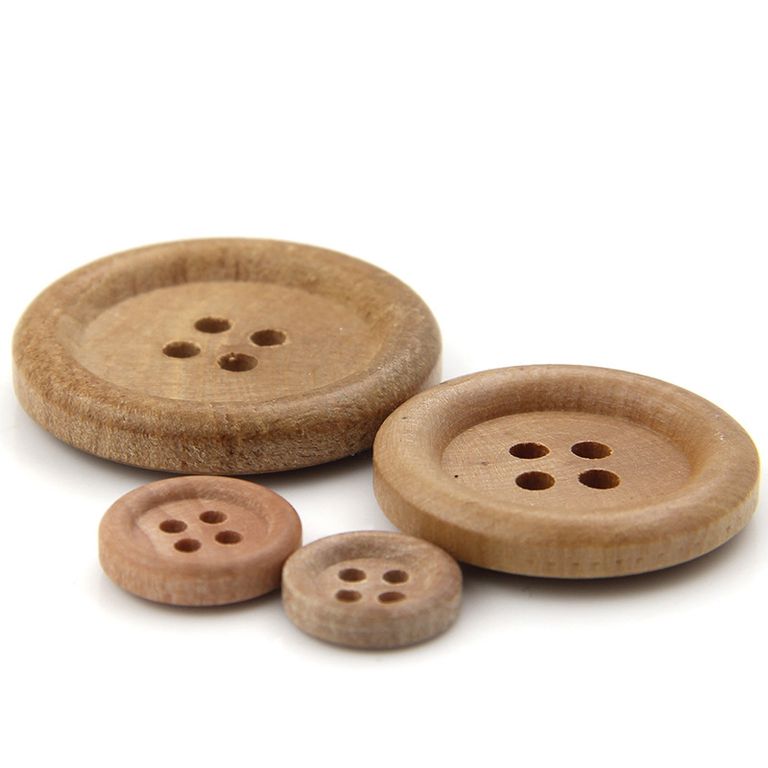
Natural wood four-hole buttons. See the wooden buttons.
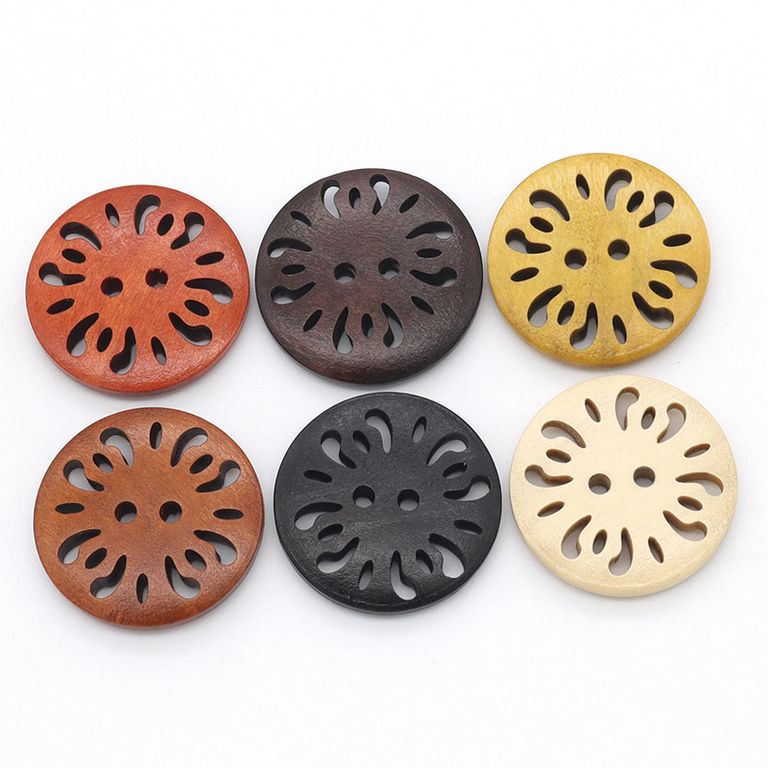
Laser-cut wooden buttons in six colours. See the laser-cut wooden buttons.
Wood grain and coconut texture vary naturally. Tell us how the garment will be washed, and we will confirm the finish on a sample.
When should you use metal buttons?
Metal shank buttons
Shank buttons have a loop on the back, so the domed face sits above the fabric. They suit coats, blazers and jackets. Our mandala-pattern shank buttons come in 15, 18, 20, 23 and 25mm, in antique brass or antique silver.
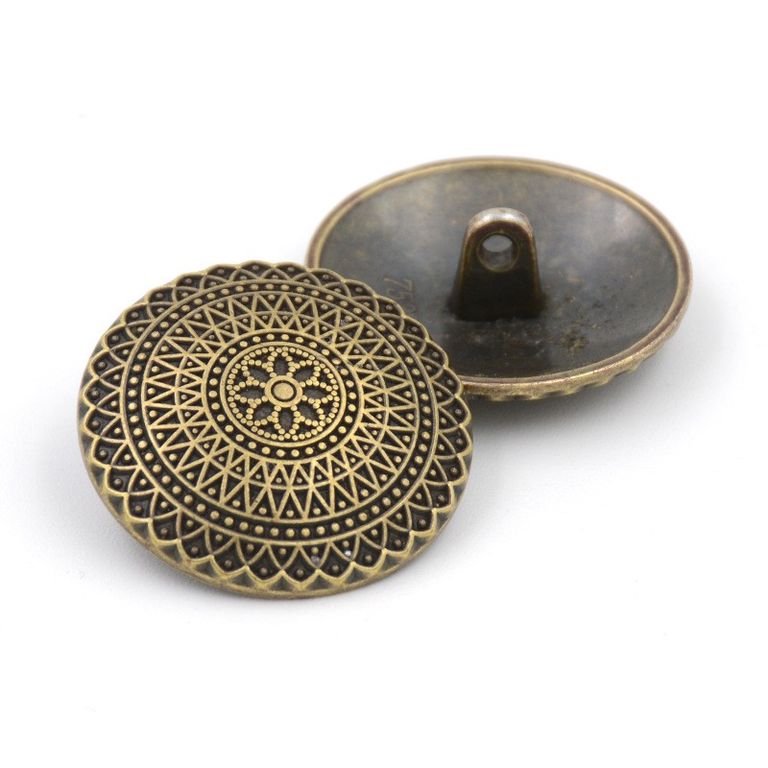
Domed metal shank buttons. See the metal shank buttons.
Jeans tack buttons and press studs
Jeans buttons are fixed with a tack pushed through the fabric, and press studs are set with a press, so neither needs sewing. Our 17mm jeans buttons and four-part press studs (10–15mm) are made in brass. See the brass jeans buttons and brass press studs.
Metal buttons can be plated in many colours; see how to choose plating colours. A logo or new face design needs a mould, usually USD 70–150 in zinc alloy.
How do I choose the right button?
- Start with the garment: shirts, knitwear, coats or denim (see the quick picks above).
- Decide on the look: colour-matched and quiet (resin), premium natural (shell), warm and casual (wood or coconut), or bold (metal).
- Measure the buttonhole and choose the size in mm or ligne.
- Decide how it is attached: sewn (holes or shank) or pressed (tack buttons and press studs).
- Choose custom details such as colour matching, logo or pattern, and approve them on a sample.
How long do samples and production take?
- Samples: about 7–10 days
- New mould (metal logos and shapes): about 10–20 days
- Bulk production: about 7–30 days depending on quantity and finish
- MOQ: 100 pieces per design
For the full development process read how to source custom hardware from China.
Frequently asked questions
What is the best button for a dress shirt?
Resin is the practical choice because it can be dyed to match the fabric; mother-of-pearl shell is the premium choice for a natural lustre.
What does 18L mean on a button?
L stands for ligne, a button size unit. One ligne is 0.635mm, so 18L is about 11.4mm across.
Can you dye resin buttons to match our fabric?
Yes. Send a fabric swatch or Pantone number and we dye samples for your approval before production.
Can you put our logo on buttons?
Yes. Wood and resin can be laser engraved; metal buttons need a mould for an embossed logo, usually USD 70–150 in zinc alloy.
Do jeans buttons need sewing?
No. A tack is pushed through the fabric into the button shank and set with a press.
What is the MOQ for custom buttons?
100 pieces per design. Samples take about 7–10 days.
Need help choosing buttons?
Send us your garment type, fabric and target price, and we will suggest buttons and send samples. Request a quote or browse sewing buttons, jeans and tack buttons and snap buttons.