
Jeans Buttons, Rivets or Press Studs? How to Choose Denim Hardware
Jeans buttons, rivets or press studs? Compare denim hardware by how it is fixed, where it goes, materials, sizes and logo options before you sample.
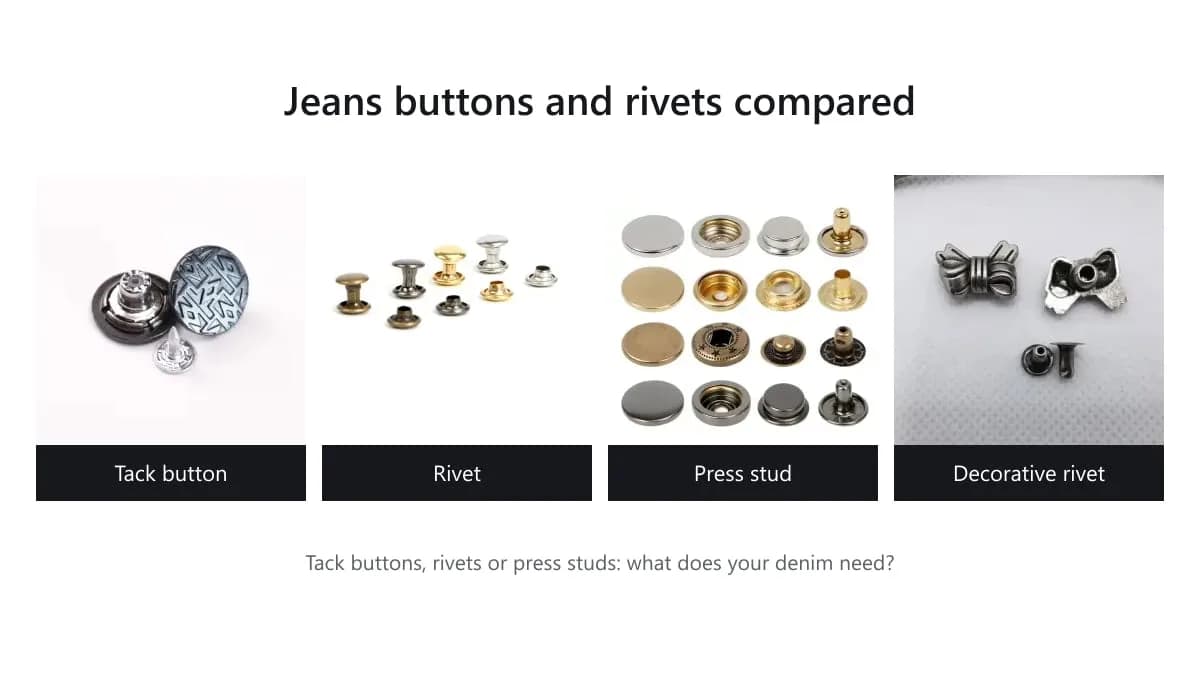
Short answer: use a jeans (tack) button to close the waistband, rivets to reinforce stress points such as pocket corners, and four-part press studs where the garment opens and closes often, such as jackets and shirts. All three are pressed on with a machine, not sewn. Brass is the usual choice for denim because it does not rust; zinc alloy is used when you want a detailed shaped or raised face.
Denim hardware is the most visible branding on a pair of jeans. This guide explains what each part does, compares them side by side with real sizes from our range, and lists what to decide before you ask for samples.
Quick picks
Jeans waistband: 17mm tack button.
Front and back pocket corners: rivets.
Denim jackets, shirts and workwear fronts: press studs or tack buttons.
Decorative trims, belts and patches: shaped decorative rivets.
What hardware does a pair of jeans need?
- Jeans button (tack button): a button with a hollow shank and a separate tack. The tack is pushed through the fabric from the inside and locks into the shank.
- Rivet: a cap and a post pressed together through the fabric. It does not open; it holds layers together at points that take strain.
- Press stud (snap fastener): four parts (cap, socket, stud and post) that snap open and closed, so it works as a fastener rather than a reinforcement.
- Decorative rivet: a rivet with a shaped or patterned cap, used for style rather than strength.
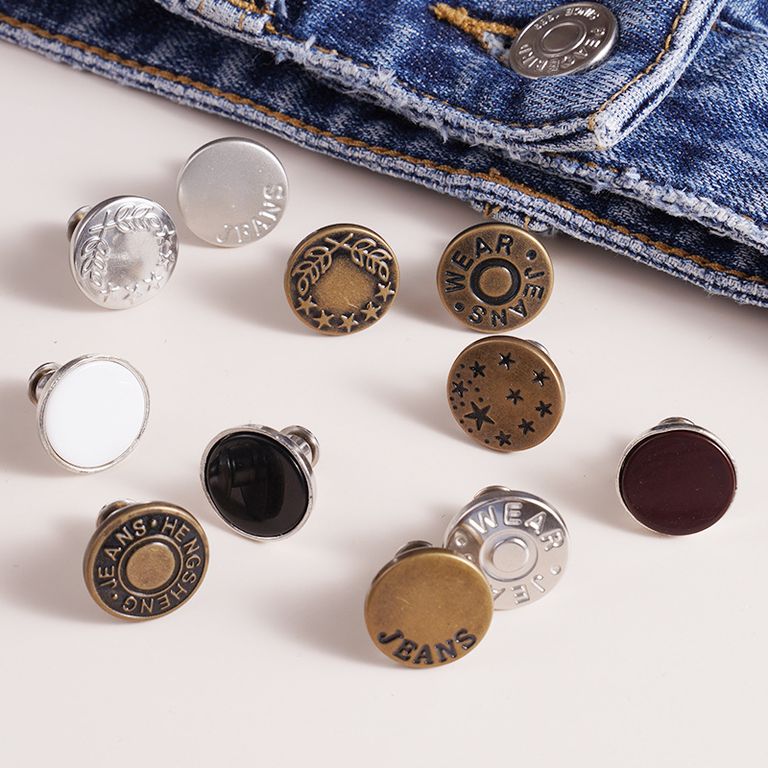
17mm metal jeans buttons on denim. See the jeans buttons.
Jeans buttons, rivets and press studs compared
Part | How it is fixed | Opens and closes? | Typical use | In our range |
|---|---|---|---|---|
Jeans button | Tack through the fabric, set with a press | Yes, through a buttonhole | Jeans waistbands, denim jackets | 17mm (also 15mm), brass or zinc alloy |
Rivet | Cap and post, set with a press | No, permanent | Pocket corners, stress points, leather patches | Capped, nipple and inverted-nipple caps; brass double cap 6x6–12x10mm |
Press stud | Four parts, set with a press | Yes, snaps open | Jackets, shirts, workwear, kidswear | Four-part studs in brass |
Decorative rivet | Cap and post, set with a press | No | Trims, belts, decorative details | Shaped zinc alloy caps |
Our MOQ is 100 pieces per design for every part in this guide.
How does a jeans button work?
A jeans button has two parts: the button, with a hollow shank on the back, and a tack (also called a nail). The tack goes through the waistband from the inside and is pressed into the shank, so the button is fixed without sewing. Our jeans buttons come with the matching tack.
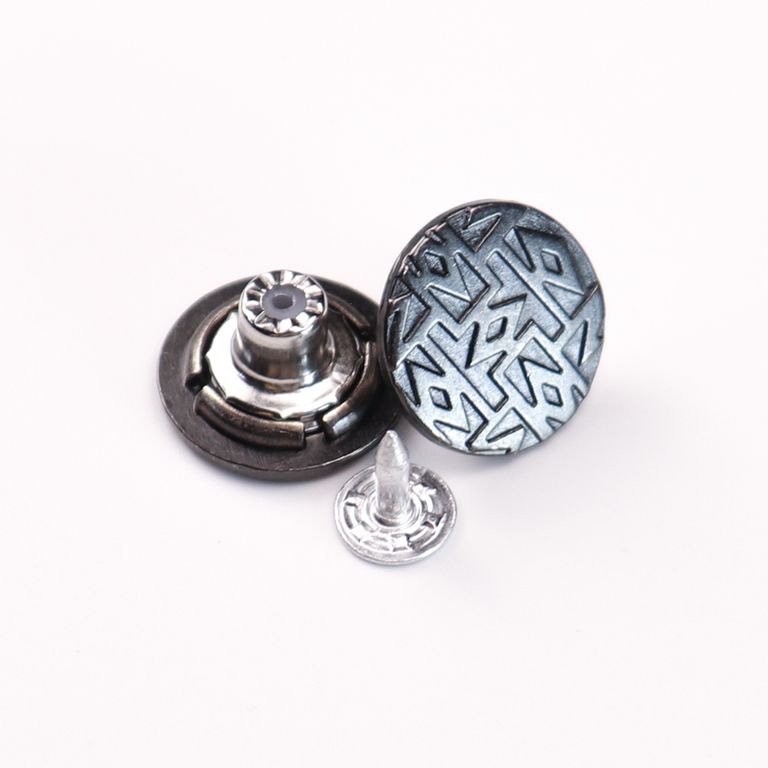
A jeans button and its tack. See the 17mm brass jeans buttons.
Which size should a jeans button be?
17mm is the most common size in our range and the usual choice for a jeans waistband. We also make 15mm buttons for lighter garments and kidswear. Check the size against the buttonhole on your sample garment.
Brass or zinc alloy?
Brass does not rust, so it is the safer choice for parts that go through the fabric and are washed again and again. Zinc alloy is die-cast in a mould, which makes it good for detailed faces, raised logos and shaped designs. Our 17mm brass jeans buttons come in gunmetal or antique silver with embossed patterns; the 17mm zinc alloy jeans buttons suit custom logo faces. For a full comparison see zinc alloy vs brass vs stainless steel.
Where do rivets go, and which cap style should you choose?
Rivets reinforce the points that take the most strain, typically the corners of the front pockets, the coin pocket and the fly. They are also used to fix leather patches and on workwear.
- Capped rivet: a smooth, closed cap; the cleanest look.
- Nipple rivet: the post shows as a small raised point in the centre of the cap.
- Inverted-nipple rivet: the centre is recessed instead of raised.
The cap diameter and post are chosen around the thickness of your fabric and how the rivet will be set. See our custom jeans rivets.
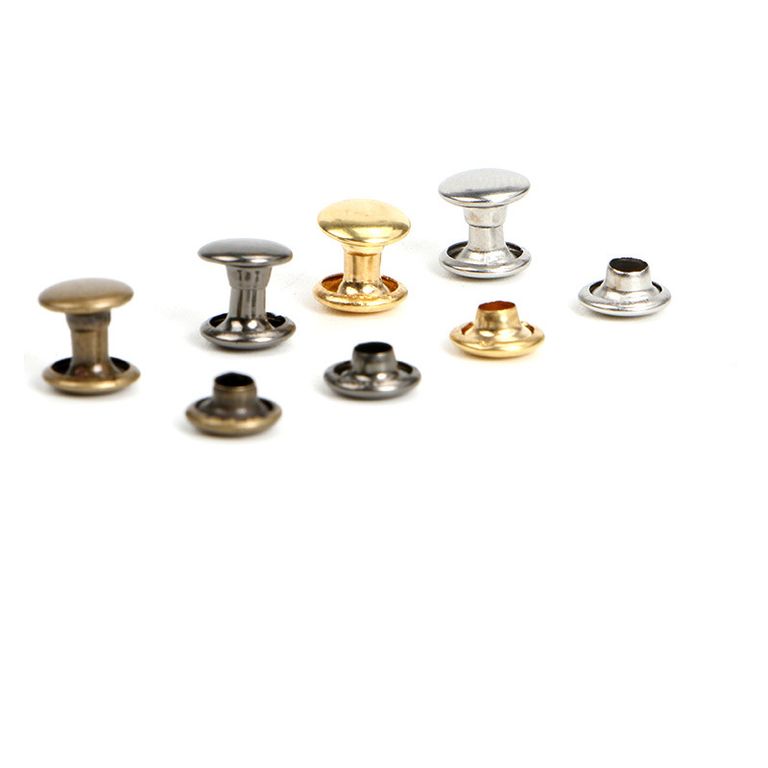
Rivet caps and posts in four colours. See the brass rivets.
For leather goods and heavier work, our solid brass double cap rivets come in cap x post sizes of 6x6, 8x8, 10x8, 10x10 and 12x10mm. The brass colour runs right through, so there is no plating to wear off.
When should you use press studs instead of buttons?
Choose press studs when the garment is opened and closed often, or when a quick snap suits the style: denim jackets, western shirts, workwear and kidswear. A press stud has four parts, cap, socket, stud and post, and all four are set with a press.
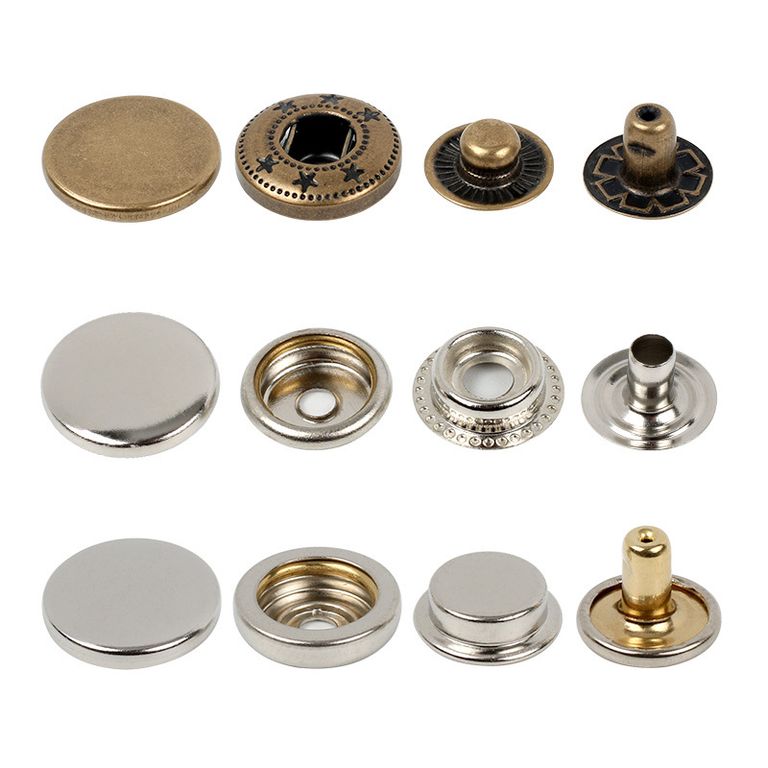
Four-part press studs in four colours. See the brass press studs.
Can denim hardware carry your logo?
Yes. Most brands put their name or logo on the jeans button and rivet caps. An embossed logo or a new shape needs a mould, usually USD 70–150 in zinc alloy; brass is quoted per design. The same mould can then be plated in different colours, so one design can be offered in antique brass, antique silver or gunmetal. See how to choose plating colours.
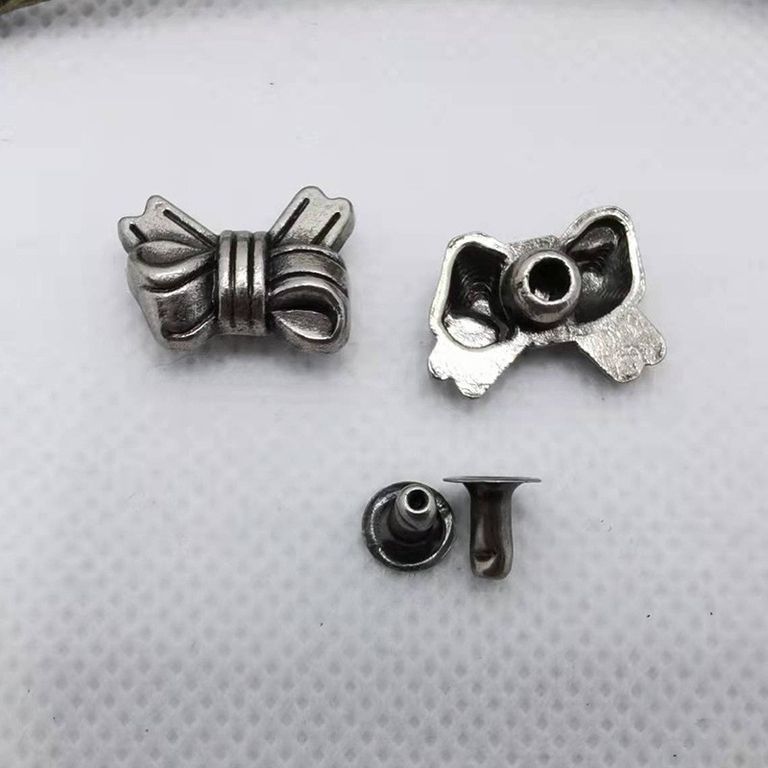
A shaped decorative rivet with its post. See the decorative jeans rivets.
Wash test: if the garment will be stone-washed or enzyme-washed, tell us when you ask for samples, and test the samples in your own wash before you approve bulk production.
How do I choose denim hardware for my collection?
- List where the hardware goes: waistband, pockets, fly, jacket front, cuffs, patches.
- Match each position to a part: button to close, rivet to reinforce, press stud to open and close.
- Choose the size (17mm is standard for a jeans button) and the rivet cap style.
- Choose brass or zinc alloy, and the finish, such as antique brass, antique silver or gunmetal.
- Send your logo artwork and approve a physical sample before bulk production.
How long do samples and production take?
- Samples: about 7–10 days
- New mould (logo or shape): about 10–20 days
- Bulk production: about 7–30 days depending on quantity and finish
- MOQ: 100 pieces per design
To prepare your inquiry, read what to include in a custom hardware RFQ and how to source custom hardware from China.
Frequently asked questions
What is the difference between a jeans button and a rivet?
A jeans button closes the garment through a buttonhole. A rivet is permanent and reinforces stress points such as pocket corners.
Do jeans buttons need sewing?
No. A tack is pushed through the fabric into the button shank and set with a press. Our jeans buttons come with the matching tack.
What size is a standard jeans button?
17mm is the most common size for a jeans waistband. We also make 15mm.
Should I choose brass or zinc alloy jeans buttons?
Brass does not rust and suits parts that are washed often. Zinc alloy is best for detailed shaped faces and raised logos.
Can you put our logo on jeans buttons and rivets?
Yes. An embossed logo needs a mould, usually USD 70–150 in zinc alloy. The same mould can be plated in different colours.
What is the MOQ for custom jeans buttons and rivets?
100 pieces per design. Samples take about 7–10 days.
Need denim hardware for your next collection?
Send us your garment type, logo and target quantity, and we will suggest buttons, rivets and press studs and send samples. Request a quote or browse jeans and tack buttons, rivets and snap buttons.